When AI Becomes the Banker: How Agentic Finance Is Rewriting the Rules
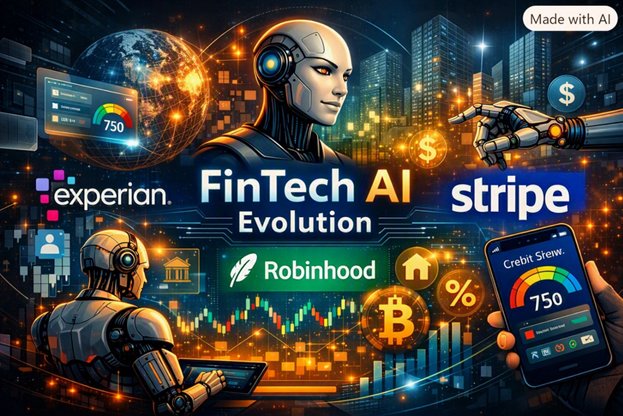
The question facing every finance professional, technologist, and executive isn't whether this will affect your industry. It already is. The real question is whether you're prepared for it - and whether the guardrails are keeping pace with the autonomy.
Your Credit Score Is Now a Conversation
Experian is letting consumers in the UK check their credit scores directly within ChatGPT. No separate portal. No new app to download. Users simply ask the AI for their credit status and get an answer - right there in the chat window.
The accessibility upside is real. Removing friction leads to higher engagement with financial health data, and that's genuinely valuable. But the risk is equally significant: personally identifiable information and sensitive credit data is being piped into a third-party AI platform, creating a large surface area for data leakage and potential regulatory non-compliance.
The hardest engineering challenge here isn't the UX. It's secure authentication - ensuring the person chatting with the large language model is actually the verified owner of that credit file. If the handshake between the AI and the data provider isn't airtight, the risk of a breach outweighs the benefit of a smoother interface.
This is still a meaningful strategic signal. We are moving away from traditional financial dashboards toward a world where your financial identity is just another prompt in a chat window. Bold on accessibility - but it opens up serious questions about regulatory compliance that the industry hasn't fully answered yet.
Payments Are Getting Smarter - Not Just Faster
Agentic AI is no longer a concept - it is actively operating across payments, trading, and credit infrastructure worldwide.
When most people think about innovation in payments, they think about speed - instant transfers, tap-to-pay, real-time settlement. But the more consequential shift happening right now is about intelligence.
Stripe's Radar system is one of the clearest examples of agentic AI at work in payments. Trained on over $1.9 trillion in annual payment volume, Radar evaluates more than 1,000 transaction signals in under 100 milliseconds - assessing device fingerprints, behavioral patterns, network history, and dozens of other variables simultaneously. In 2025 alone, Radar blocked $110 billion in fraudulent transactions across the Stripe network, while delivering an average 17% reduction in dispute rates for merchants over the past three years.
What makes Radar agentic - not merely algorithmic - is that it doesn't rely on static rules. It adapts. When new fraud patterns emerge anywhere in the global network, the system learns and recalibrates for every merchant, everywhere, automatically. It can also write and test its own fraud detection rules in plain language, using AI to backtest configurations before they go live.
This shift has profound implications. A payments infrastructure that learns and adapts is an infrastructure that compounds in value over time. The more volume it processes, the smarter it becomes. For merchants and financial institutions alike, this represents a structural competitive advantage that is difficult to replicate without scale.
Trading Without a Human Hand on the Wheel
Robinhood has rolled out the Model Context Protocol (MCP) - users can now connect autonomous agents via MCP servers to handle trading on their behalf. We have officially moved from clicking buttons on a dashboard to managing agents that do the trading for us.
The product experience is compelling. The liability question is not. There is a massive gap in who is responsible when an AI agent makes a catastrophic error. If a bot hallucinates a trade and wipes out an account, it is currently unclear whether the broker, the model provider, or the user takes the hit. That ambiguity is a significant legal risk for brokers - and it could easily trigger strict regulatory mandates before the industry has time to self-govern.
The rise of agentic trading is also making financial forecasting extremely difficult. When autonomous agents can trigger unpredictable budget shifts or execute large trades based on signals that no human approved, traditional planning becomes a guessing game. The speed is the feature - and the risk.
Coupa offers a useful parallel at the enterprise level. Their AI agent is now handling payment batches of over 2,395 invoices at a time - a genuinely impressive operational win for accounts payable. But even at that scale, the AI still cannot have the final say on the money. Human oversight remains essential, and that distinction matters enormously when we talk about accountability.
The Efficiency Gain Nobody Talks About
The headlines in agentic AI tend to focus on consumer-facing products - chatbots, trading tools, credit apps. But some of the most significant transformation is happening behind the scenes, in the operational infrastructure of enterprise finance.
Coupa's AI agent processing over 2,395 invoices in a single payment batch isn't a flashy story. It's an enormous one. Accounts payable is one of the most labor-intensive, error-prone functions in corporate finance. When an AI agent can handle that volume accurately and at speed, the efficiency gains compound quickly across an organization's entire financial operation.
DBS Bank is pursuing a similar transformation in lending. They are using AI agents for automated corporate credit decisioning - moving AI from an advisory role into the actual workflow of assessing and approving credit for businesses. This is part of a broader trend of operational AI embedding itself into lending and credit processes that were once almost entirely manual.
These aren't glamorous use cases. They don't make for exciting demos. But they represent the kind of deep, durable efficiency transformation that fundamentally changes cost structures and competitive positioning - and they're spreading fast across enterprise finance.
Governing What You Can't Always See
In the EU, most securities firms are keeping 87% of their AI use cases internal to stay compliant with the EU AI Act. That single statistic tells you a lot about where the regulatory pressure is pointing - and how seriously major institutions are taking it.
The cautious approach reflects a real constraint: autonomy must be governed. When AI agents are making consequential decisions - on credit, on trades, on payments - regulators want visibility into how those decisions are made, what data drove them, and who is accountable when they go wrong. Keeping AI internal is one way to maintain that control while the governance frameworks catch up.
Singapore and the UK are both actively developing frameworks to address AI in financial services - and they are approaching it differently, which matters for firms operating across jurisdictions. What's clear is that the regulatory environment is evolving fast, and waiting for final rules before building governance infrastructure is not a viable strategy.
Expect a surge in specialized governance tooling designed specifically for internal-only AI audits. The firms that build robust audit trails, explainability layers, and override protocols now will be far better positioned when the mandates arrive. The winners won't be those with the fastest agents - they'll be the ones who build the most reliable guardrails.
What Finance Leaders Should Be Thinking About Right Now
AI literacy is now urgent. The most dangerous position a leader can occupy is one of informed ignorance - knowing that AI is important without understanding enough to ask the right questions. You don't need to become an engineer. But you do need to understand what agentic AI can and cannot do, what the failure modes look like, and where human judgment remains irreplaceable.
The technical ability to execute a task is increasingly easy. Governing it is where the actual value lies. Every story in this article - Experian's authentication challenge, Binance's agent access model, Robinhood's liability gap - comes back to the same underlying problem: the infrastructure of execution is moving faster than the infrastructure of accountability.
Security models designed for humans will fail when agents are the API consumers. Rate limiting, authentication, audit trails - all of it needs to be rethought for a world where the entity on the other end of your API isn't a person sitting at a desk. If your security posture hasn't been updated with agentic access patterns in mind, that's an exposure that needs to close.
And liability frameworks must evolve - fast. The Robinhood MCP rollout makes this concrete: when an autonomous agent executes a bad trade, the legal question of who owns that outcome is genuinely unresolved. Brokers, model providers, and users are all operating in a gray zone right now. Regulators will eventually draw lines. The firms that have already built internal clarity will have a significant advantage when that happens.
Also published on LinkedIn - read it there and join the discussion.
Written by Rakesh Sharma · Get in touch