The Future of Trust & Security in AI-Driven Payments
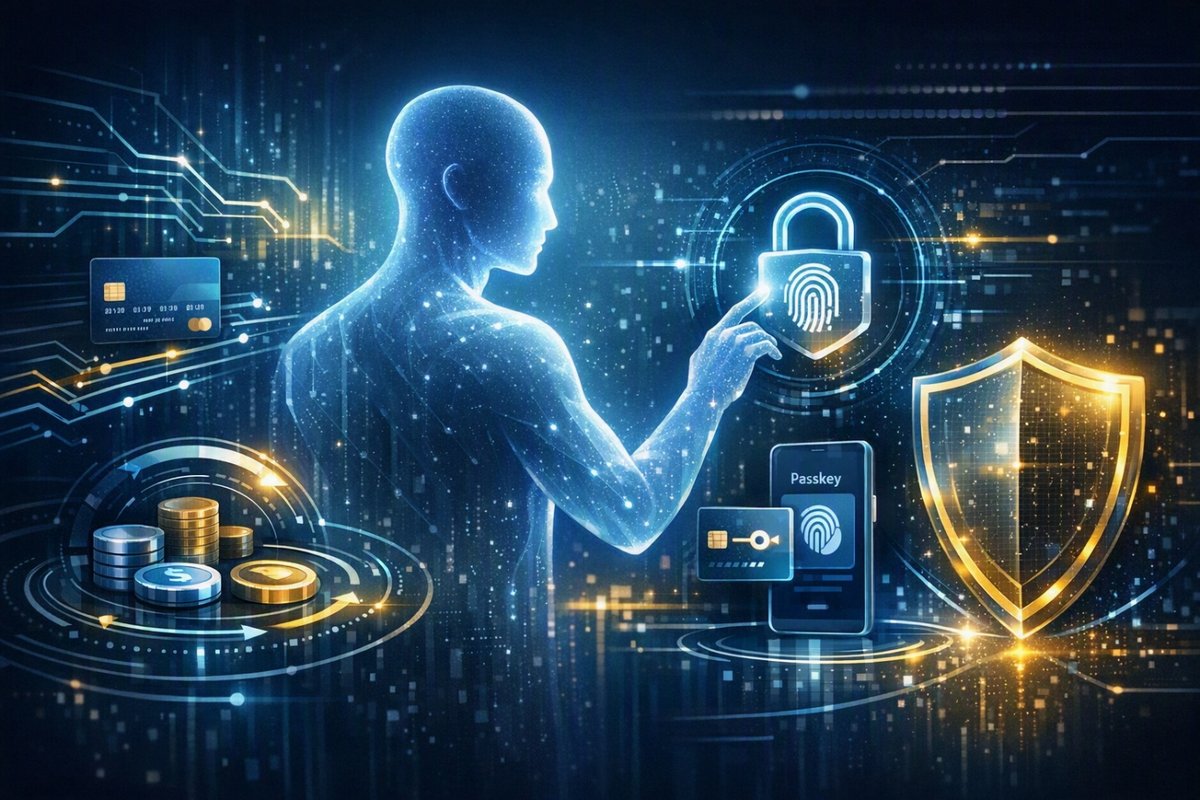
AI agents are no longer theoretical. They are beginning to transact, make financial decisions, and interact with the open internet on behalf of users. This shift marks one of the most consequential transitions in modern payments: the rise of autonomous financial actors.
But autonomy introduces a new challenge - trust.
As AI agents gain the ability to initiate purchases, move assets, interact with DeFi, or book services, the industry must rethink how security, authorization, and identity work in a world where the “user” may not be a human tapping a screen, but an intelligent agent acting on their behalf.
Recent moves in the industry highlight this shift. MoonPay’s launch of PayBox and Visa’s acquisition of BioCatch signal a clear direction: trust infrastructure is becoming the new competitive frontier in FinTech.
AI Agents Need a New Trust Layer
Traditional payment flows assume a human is present at the moment of authorization. AI breaks that assumption.
PayBox introduces a model where AI agents can initiate transactions - on-ramping, swapping, bridging, booking travel - while users retain control through passkey-based approvals. This is a foundational shift:
- AI can act, but cannot hold funds.
- Every action is single-use and non-replayable.
- No raw card numbers or reusable credentials ever exist.
This architecture eliminates entire fraud vectors that have plagued digital payments for decades.
It also sets a precedent: in the agent economy, trust must be programmable.
Security Is Becoming Intelligence-Driven
Visa’s $2.4B acquisition of BioCatch reinforces a parallel trend: security is moving from static rules to behavioral intelligence.
BioCatch’s fraud-detection models analyze cognitive and behavioral patterns - how users type, swipe, pause, or navigate - to detect anomalies. In an AI-driven world, this becomes essential. Why? Because AI agents will behave differently from humans, and fraudsters will attempt to mimic both.
The future of trust will require systems that can distinguish:
- Human intent
- Agent intent
- Malicious automation
This is not just fraud prevention - it’s identity assurance for a hybrid human-AI financial ecosystem.
The New Trust Stack for AI-Driven Payments
Across PayBox, Visa, and emerging agentic commerce protocols, a new trust stack is forming:
- Passkey-based identity → replaces passwords and static credentials
- MPC + TEEs → secure key management without custody tradeoffs
- Behavioral biometrics → continuous authentication
- Single-use authorizations → eliminate replay attacks
- Agentic commerce protocols → define how AI agents safely transact
- User-defined autonomy levels → “Always Ask” vs “Autonomous” modes
This stack is not optional. It is the foundation for enabling billions of AI agents to participate in the global economy without introducing systemic risk.
Why This Matters for the FinTech Industry
AI agents will fundamentally reshape how consumers interact with money:
- Payments will disappear into conversation.
- Financial decisions will be delegated.
- Fraud will evolve into machine-driven adversarial attacks.
- Compliance will need real-time agent-level visibility.
- Banks and FinTechs will need to expose agent-friendly APIs.
The winners in this next era will be the companies that build trust infrastructure, not just payment rails.
MoonPay’s PayBox and Visa’s BioCatch acquisition are examples of how major players are investing in trust infrastructure. But the broader shift extends well beyond any single company: banks, FinTechs, payment networks, and DeFi protocols will all need to build for agent-safe commerce.
My Perspective
As someone who has spent years in platform engineering and FinTech, I see this moment as a turning point.
AI agents will not replace financial institutions - but they will reshape how consumers interact with them. The institutions that thrive will be those that invest early in:
- Agent-safe authorization flows
- Intelligent fraud detection
- Secure identity primitives
- Transparent user-intent controls
- Infrastructure that treats AI as first-class economic participants
Trust is no longer a feature. It is the product.
And, in the AI-driven payments era, trust will be the most valuable currency we build.
Also published on LinkedIn - read it there and join the discussion.
Written by Rakesh Sharma · Get in touch